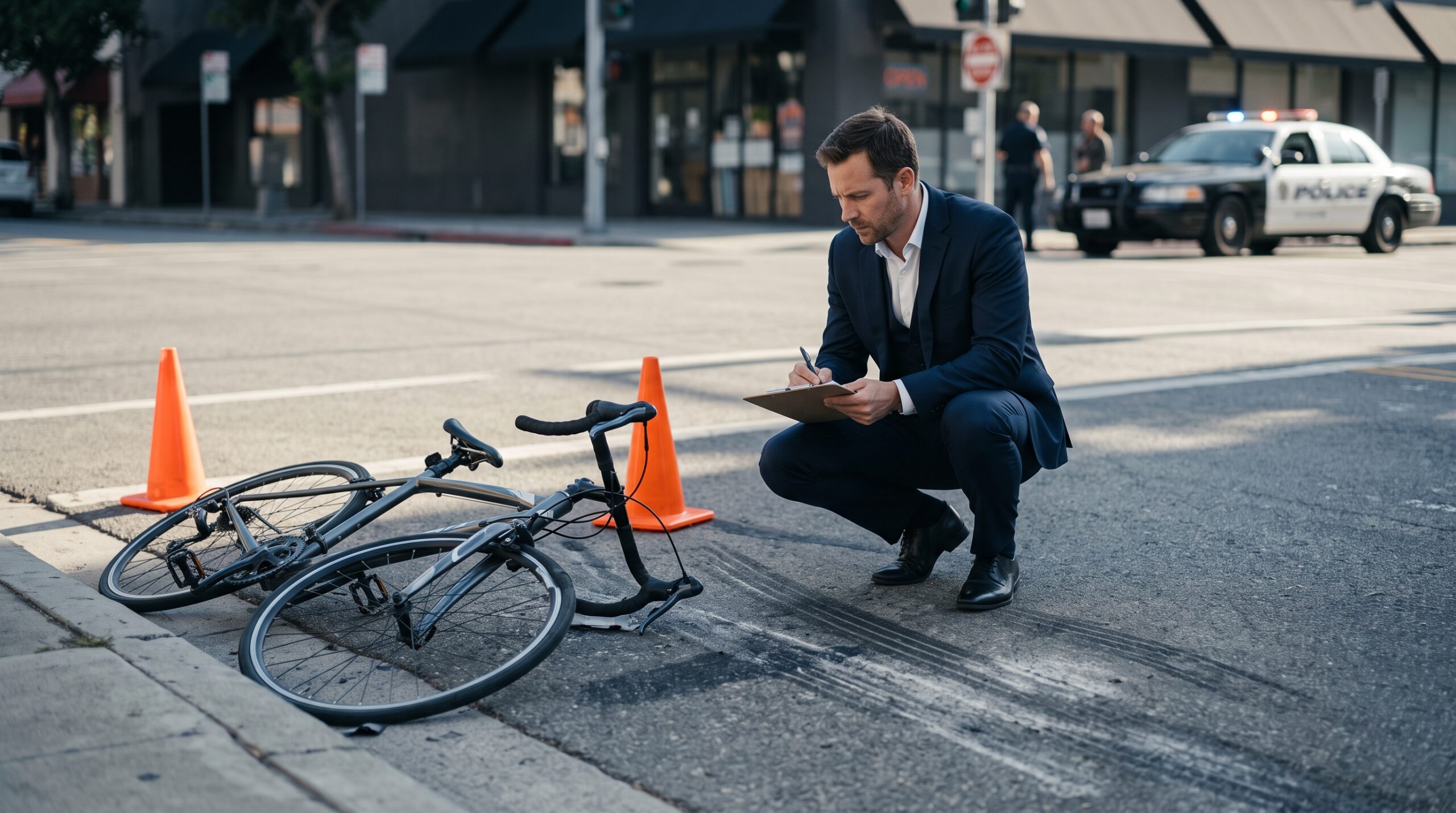
Bike claims look like car claims on the intake sheet: a driver, an insurer, a police report. They do not behave like car claims. The rider has no steel frame, so injuries run more severe. The driver usually walks away to give the only statement at the scene. The decisive evidence is often digital and gets overwritten within days. And in four states, a single misstep by the rider can end the claim. This guide is for firms that want to screen, build, and resolve bicycle claims well.
Key Takeaways
- NHTSA counts 1,103 cyclist deaths and about 52,887 injuries in 2024. Deaths cluster in urban areas (81%), away from intersections (60%), and in Florida, California, and Texas.
- The decisive evidence in bike claims, including video, vehicle event data, and the rider's own GPS file, is often lost within days. The first week of work decides the strength of the file.
- Fault rules change claim value more in bike crashes than in most auto claims. Alabama, Maryland, North Carolina, and Virginia still apply contributory negligence; Washington, D.C. has a protective rule for cyclists.
- The rider's own auto policy, through uninsured and underinsured motorist coverage, is often the deciding recovery source.
- E-bike crashes can add product liability defendants. The CPSC estimates 155,200 e-bike emergency department visits from 2017 through 2024.
Where Bicycle Crash Claims Come From
Bicycle claims concentrate in urban markets, peak from July through October, and involve older riders than most firms expect. NHTSA's 2024 data shows 81% of cyclist deaths in urban areas, 60% away from intersections, an average victim age of 48, and the most deaths in Florida (208), California (163), and Texas (79). Light trucks, including pickups and SUVs, were the vehicle type most often involved in fatal single-vehicle crashes with cyclists.
Two practical implications follow. First, firms in dense metros and Sun Belt states will see a steady flow of these claims and should build intake for them on purpose. Second, the seasonal peak means marketing and staffing for bike crashes should lean into late summer and early fall, when NHTSA reports deaths are highest.
The Intake Questions That Predict a Strong Bike Claim
A strong bicycle claim usually has three things: a liability pattern that favors the rider, evidence that can still be preserved, and an insurance source large enough to matter. Intake should surface all three in the first call, along with any rider conduct the defense will use. These questions do most of that work.
- Where were you in the road, and which direction were you traveling? (Riding with traffic, in a lane or bike lane, is the baseline; riding against traffic is a major defense theme.)
- Was it dark, and were you using a front light and rear light or reflector?
- Did you have a green light or right of way? Were there signals, stop signs, or lane markings?
- Were you wearing a helmet, and do you still have it? Do you still have the bike?
- Were you recording the ride on a bike computer, watch, phone app, camera, or rear radar?
- Are there businesses, homes, buses, or traffic cameras near the scene?
- Did police come, and did you give them your account before you left the scene?
- What kind of vehicle hit you, and do you have the driver's insurance information? Did the driver stay?
- Do you or anyone in your household have auto insurance, including uninsured and underinsured motorist coverage?
- Were you on an e-bike? If so, what make and model, and did anything on the bike fail?
- When did you first get medical care, and have you had prior injuries to the same body parts?
The answers sort claims quickly. A night crash with no lights in a contributory negligence state is a very different file from a daytime overtaking crash captured on a rear camera.
Liability Patterns and the Evidence That Proves Them
Most car-bike collisions fall into a handful of patterns, and each one has a typical liability theory and a typical piece of evidence that wins or loses it. Mapping the crash to its pattern at intake tells the firm what to preserve first.
Crash pattern
Typical liability theory
Evidence to secure first
Overtaking / sideswipe
Unsafe passing; violation of safe passing law
Rear camera or radar footage, vehicle damage location, ride file showing steady line
Right hook
Turning across the path of a rider the driver just passed
Video from corner businesses, vehicle turn-signal and speed data
Left cross
Failure to yield to oncoming traffic
Intersection and traffic cameras, rider lighting and speed
Dooring
Opening a door into traffic when unsafe
Witnesses, door damage, rideshare trip records if a passenger opened it
Driveway or lot exit
Failure to yield when entering the roadway
Business and residential video, sightline photos at the same time of day
Rear-end
Following too closely, distraction, impairment
Event data recorder, phone records, toxicology
Patterns drawn from common car-bike crash types; the right theory and evidence depend on each crash and state law.
Safe passing laws strengthen the overtaking case. According to the League of American Bicyclists, all 50 states have a safe passing law, and 38 states plus D.C. set a minimum distance, typically three feet. A rear camera that shows the gap at the moment of the pass can turn a swearing contest into a statutory violation.
Fault Regimes: Pricing the Risk Before You Sign
The same bike crash can be worth full value in one state and nothing across the line, depending on how shared fault is treated. Firms should assess the fault regime before signing, because any rider error, such as no rear light at dusk or a rolling stop, carries very different weight under each rule.
- Pure comparative negligence: recovery is reduced by the rider's share of fault, at any percentage.
- Modified comparative negligence: the majority approach. Recovery is reduced by the rider's share and barred once that share reaches the state's threshold, usually 50% or 51%.
- Contributory negligence: in Alabama, Maryland, North Carolina, and Virginia, any negligence by the rider can bar recovery, subject to narrow doctrines such as last clear chance.
Washington, D.C. is the important exception in the region. Under D.C. Code § 50-2204.52, a cyclist's negligence bars recovery only if it was a proximate cause of the injury and greater than the combined negligence of all defendants, and the District has extended that protection to e-bikes and similar devices. Maryland, by contrast, still applies contributory negligence to cyclists after a 2026 bill to change it failed. For firms in the D.C. region, the crash location can decide the file.
The First-Week Evidence Plan
In a bicycle claim, the evidence most likely to decide liability is also the evidence most likely to disappear. Video is overwritten on rolling schedules, vehicles are repaired, and riders sync and delete ride data. A firm that sends preservation requests and secures the physical evidence in the first week is building a different case than one that starts a month later.
- Send preservation letters to the driver and insurer (vehicle and event data recorder), nearby businesses and homeowners (video), transit agencies (bus cameras), and any rideshare or commercial operator involved.
- Request public records quickly: the crash report, 911 audio, dispatch logs, and officer body camera footage where available.
- Secure the rider's data. Export the ride file from the bike computer, watch, or app, and preserve any rear camera or radar footage before the device overwrites it.
- Take custody of the bike, helmet, and clothing with a documented chain of custody. Do not let the client repair or discard anything.
- Document the scene at the same time of day and day of week as the crash, capturing sightlines, lighting, lane markings, and signal timing.
- Lock down witnesses while memories are fresh, especially independent cyclists and pedestrians who left before police arrived.
- Plan for phone records and toxicology through the proper legal process when distraction or impairment is in question.
None of this requires an expert on day one. It requires an intake team that knows the clock starts at the crash, not at the signed fee agreement. For more on building that function, see our article on the operator who owns intake.
Insurance and Recovery Sources
Bike claims often have more recovery sources than they first appear to, and the at-fault driver's policy is frequently not the largest. Many drivers carry only modest liability limits, and hit-and-runs leave no liability policy at all. Mapping every policy at intake can change the value of the file.
- The driver's liability policy, plus any employer or commercial policy if the driver was working.
- The rider's own auto policy. Uninsured and underinsured motorist coverage commonly applies to a cyclist struck by a car, and stacking rules in some states can increase available limits.
- Household policies. Resident relatives' auto policies may provide additional underinsured motorist coverage depending on policy language and state law.
- Personal injury protection or medical payments coverage, which may pay early medical bills, especially in no-fault states.
- Rideshare coverage when a rideshare driver or passenger caused the crash.
- Government entities, when road design, maintenance, or a bike lane defect contributed. These claims often carry short notice deadlines that must be calendared immediately.
- Product defendants, when an e-bike or component failed (below).
Health plan and government liens should be identified early, because they can consume a meaningful share of a settlement if they are not negotiated.
E-Bike Claims Add Defendants and Questions
E-bike crashes are growing quickly and can add product liability claims that ordinary bike crashes do not have. The Consumer Product Safety Commission's April 2026 micromobility report estimates 155,200 emergency department visits involving e-bikes from 2017 through 2024 and lists motor vehicle collisions and control issues as the top hazards in e-bike deaths.
Firms handling e-bike claims should identify the bike's class under state law, which can affect where it could legally be ridden; preserve the bike, battery, and controller for inspection; and consider whether a brake, throttle, frame, or battery failure points to the manufacturer, importer, or seller. Because many e-bikes are imported and sold online, identifying a solvent defendant within the chain of distribution is part of early case evaluation.
Damages, Helmets, and Juror Attitudes
Bicycle claims tend to carry serious damages, including head injuries, fractures, shoulder and spinal injuries, and extensive road rash, but they are tried before jurors who may share common driver frustrations with cyclists. Winning value usually means showing a predictable, lawful rider and a driver who had time and room to avoid the crash.
Helmet evidence is a recurring fight. No state requires all adult cyclists to wear helmets, and whether a defendant can argue helmet non-use to reduce damages varies by state, with many jurisdictions limiting or excluding it. When the client did wear a helmet, its damage pattern can support both the mechanism of injury and the severity of the impact.
Firms that try cases earn more on the ones they settle. That is as true for bike crashes as for any motor vehicle claim, and it is the subject of our article on growing a firm without losing trial capability.
Getting to the Client First
Speed to contact matters even more in bicycle claims than in other crash types, because the evidence clock and the client's decision clock start at the same moment. Clio's 2024 secret-shopper study found only 40% of law firms answered a prospective client's call. A firm that answers, qualifies, and sends preservation letters in the first days wins both the client and the evidence.
Best Case Leads delivers exclusive, phone-verified motor vehicle accident leads to plaintiff firms in real time, with no contracts or monthly commitments, cancel anytime. Each lead goes to one firm, the moment it is submitted, so the firm's intake team can start the clock before the evidence is gone.
Frequently Asked Questions
What makes bicycle accident claims different from car accident claims?
Bicycle claims usually involve more severe injuries, a driver who gives the only statement at the scene, digital evidence that is overwritten within days, and juror attitudes toward cyclists that can affect value. Shared-fault rules also matter more, because small rider errors are common defense themes.
Which states use contributory negligence in bicycle accident cases?
Alabama, Maryland, North Carolina, and Virginia apply contributory negligence, which can bar recovery for any rider fault. Washington, D.C. protects cyclists: a cyclist's negligence bars recovery only if it was a proximate cause and greater than the combined negligence of the defendants.
What evidence should a firm preserve first in a bike crash?
Video from nearby businesses, homes, transit, and traffic cameras; the vehicle's event data recorder; the rider's GPS ride file and any rear camera footage; and the bike, helmet, and clothing with a documented chain of custody. Most digital evidence must be preserved within days.
Does a cyclist's own car insurance cover a bike crash?
Often it does. Uninsured and underinsured motorist coverage commonly applies when a cyclist is struck by a car, and personal injury protection or medical payments coverage may pay early medical bills. Coverage depends on state law and policy language.
Can e-bike crashes involve product liability claims?
Yes. When a battery, brake, throttle, or frame failure contributed to the crash, the manufacturer, importer, or seller may share responsibility with any at-fault driver. The bike, battery, and controller should be preserved for inspection.
About the Author
Fadi Agour, J.D., is the founder and CEO of FadiLaw Marketing LLC, the Houston-based parent company of Best Case Leads, Real Performance Marketing, Masstortsco, and Redostar. For more than seven years he has built performance-marketing companies that connect injured consumers with the plaintiff law firms equipped to represent them. His companies have earned a place on the Inc. 5000 list of America's fastest-growing private companies seven consecutive times (7x Badge). He writes about mass tort litigation, product liability, and the business of plaintiff law.
Sources and Further Reading
- National Highway Traffic Safety Administration, "Bicyclists and Other Cyclists: 2024 Data," Traffic Safety Facts (DOT HS 813 822): https://crashstats.nhtsa.dot.gov/Api/Public/ViewPublication/813822
- National Highway Traffic Safety Administration, "Bicycle Safety": https://www.nhtsa.gov/road-safety/bicycle-safety
- League of American Bicyclists, "Bike Law University" (safe passing laws by state): https://bikeleague.org/bike-laws/bike-law-university/
- S. Consumer Product Safety Commission, "Micromobility Products-Related Deaths, Injuries, and Hazard Patterns: 2017-2024" (April 2026): https://www.cpsc.gov/s3fs-public/Micromobility_Products-Related_Deaths_Injuries_and_Hazard_Patterns_2017-2024.pdf
- Stein Sperling, "Maryland’s Contributory Negligence Rule" (contributory negligence jurisdictions): https://steinsperling.com/marylands-contributory-negligence-rule/
- Maryland Motorcycle Accident Lawyer Blog, "How Maryland’s Vulnerable Road User Protection Act Helps Injured Cyclists" (Sept. 2026; D.C. Code § 50-2204.52): https://www.marylandmotorcycleaccidentlawyerblog.com/how-marylands-vulnerable-road-user-protection-act-helps-injured-cyclists/
- Northern Virginia Legal Examiner, "D.C. Contributory Negligence Rule Changed to Protect Scooter, E-Bike Riders": https://northernvirginia.legalexaminer.com/rakin-hamad/transportation/d-c-contributory-negligence-rule-changed-to-protect-scooter-e-bike-riders/
- Clio, "Highlights from the 2024 Legal Trends Report" (firm responsiveness): https://www.clio.com/blog/highlights-from-2024-legal-trends-report/
This article is provided for general informational and educational purposes only. It is not legal advice, does not create an attorney-client relationship, and should not be relied upon as a substitute for consultation with a licensed attorney about your specific circumstances. Allegations in pending litigation described here have not been adjudicated, and defendants deny them. Case status, settlement terms, and deadlines change; verify current information with counsel.
Check availability in your market.
Exclusivity is limited by geography. Tell us your practice area and state, and we'll confirm what's open.