
By Sara Papantonio
Introduction
United States military bases around the world are designed to be impenetrable zones, with foundations equipped to withstand the force of any foreign enemy attack. Camp Lejeune, a US Marine Corp base in North Carolina was built to be no different. However, from the 1950s to the late 1980s, this Marine base was breached by a foreign invader arguably worse than the Vietcong or North Koreans. For 30 years, men, women, and children who were stationed at Camp Lejeune were poisoned with deadly volatile organic chemicals found in the base’s drinking water.
At Camp Lejeune

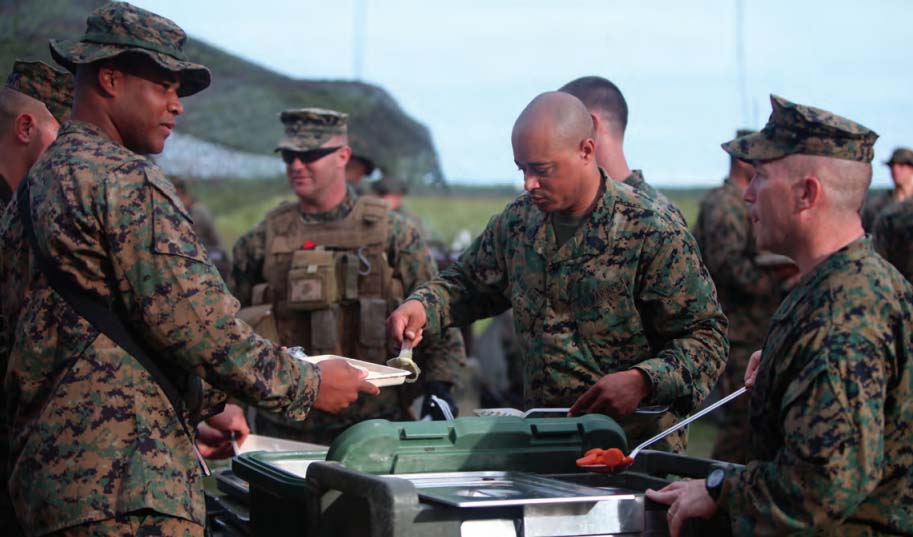
In the 1940s, Camp Lejeune was built to be an idealistic military strong hold. The base served as a makeshift city for service members and their families. It became a breeding ground for Marines preparing for deployment to warzones in Korea and Vietnam. The marine base was equipped with barracks, military training facilities, hospitals, schools, daycares, and shopping centers. Nearly every member of the US Marine Corp spent time training at Camp Lejeune. While Marines trained or prepared for deployment, their children and spouses swam in the Camp Lejeune’s pools, shopped in its shopping centers, and utilized the base’s many amenities. Little did they know, every moment they spent drinking, bathing in, swimming in and cooking with Camp Lejeune water placed them at a higher risk of developing cancer or a serious illness. As these individuals carried on their day-to-day lives, hundreds of thousands of gallons of toxic waste leaked into the drinking water under their feet.
The Contamination

For more than 30 years, the Camp Lejeune public drinking water was contaminated by various volatile organic compounds (VOC), some at levels as high as 280 times what is considered safe under law. Between 1953 and 1987, veterans and their families were exposed to VOCs such as trichloroethylene (TCE) and tetrachloroethylene (PCE); as well as benzene; trans-1,2-dichloroethylene (DCE); and vinyl chloride. These deadly chemicals were prominent in two of the eight water treatment plants that serviced housing areas on base. A government-funded study
found that PCE was the main contaminant found at Tarawa Terrace housing area, with concentrations exceeding Environmental Protection Agency (EPA) maximum contaminant levels. At another location, Hadnot Point, the main contaminant found was TCE at 1,400 parts per billion (ppb). The current EPA limit for TCE is 5 ppb. DCE, PCE, benzene, and vinyl chloride were also discovered in these this treatment plants. These contaminants found in the drinking water have all been classified as class one and class two carcinogens. Studies have linked these chemicals to 20 different cancer types and dozens of serious illnesses. During this 30-year time period as many as one million men, women, and children were exposed to these deadly chemicals at rates of hundreds, if not thousands, of times what the EPA has deemed to be safe.
The unfortunate reality is these Marines, who were deployed to perilous countries like Korea, Vietnam, and the Middle East, were arguably safer in their deployment abroad than they were in their time at Camp Lejeune. An estimated 200,000 service members lost their lives in Vietnam. Well over 200,000 people have contracted cancer, lifethreatening diseases, or died as a result being exposed to the toxic water at Camp Lejeune. Some victims were never even given the chance to live. During this thirty-year contamination period, hundreds stillborn births befell the base. The infant death were so prevalent that a stretch of the base cemetery coined the name “baby heaven,” where two to three babies were buried per grave. Yet, despite the cancer clusters and infant deaths, the government continued to ignore the chemicals pooling within Camp Lejeune’s water system.
Government Cover-Up
In the 1980s the government was presented multiple tests showing the alarming levels of toxic chemicals in the base drinking water. However, instead of taking measures to protect the men, women, and children consuming this poisonous water, the United States Marine Corps knowingly allowed marines and civilians to be exposed. The government did not close the contaminated water wells until years after it learned of the problem. When the reality of the water contamination was finally revealed to the public, the government blamed the source of contamination on an off-site dry cleaning business which was dumping industrial waste in the wastewater drains. The truth about the government’s involvement in Camp Lejeune’s water contamination finally emerged in 2009 when it was revealed that approximately 800,000 gallons of fuel from base’s own fuel tanks had leaked into the main wells that service the base.
The Fight Began
Marines and their families began to fight back as news of this deadly contamination was brought to light. This is when Ed Bell, a lawyer from South Carolina, began his decade long fight to help victims of this contamination. In 2009, Ed, along with several other mass torts firms, filed lawsuits against the government for its deceitful acts of negligence against US Marines. Thousands of these Camp Lejeune cases were consolidated as a multidistrict litigation.
While the Judge’s rulings in the early stages were favorable to the victims, the plaintiffs could not overcome the procedural defenses raised by the government. Eventually, the government prevailed on Statute of Repose, Statute of Limitations and Government immunity grounds. Ed spent years petitioning the Court to reconsider but was unsuccessful. This dismissal left over 4,000 plaintiffs with no means to recovery for their cancer or debilitating illness.
Lawyers involved began to accept the impossibility of recovering for Camp Lejeune victims. Ed Bell never lost hope. When other plaintiff firm’s accepted defeat and moved on to their next case, Ed kept fighting. Ed Bell refused to accept there was nothing more he could do for his clients. When the Court told him there was no legal cause of action for his clients, he created one.
The Camp Lejeune Justice Act
Ed Bell is considered one of the founding fathers of the Camp Lejeune Justice Act. While the Act was a joint vision by several contributing firms, Ed Bell truly championed this effort. Ed Bell and his firm spent thousands of hours and millions of dollars drafting this legislation and lobbying to get the Camp Lejeune Justice Act passed. After 15 years in litigation and in advocacy in Congress that vision has become a reality. On August 10, 2022, the Camp Lejeune Justice Act was enacted, granting a cause of action for victims of the water contamination against the government. This legislation is unlike anything we have seen before.
The United States will finally fulfill its obligation to service members, their families, and civilians who fell victim to the Camp Lejeune Water Contamination. The Act is a true work of genius. The Camp Lejeune
Justice Act establishes a simple cause of action permitting individuals who were harmed by the contaminated water at Camp Lejeune over the relevant period of time to obtain relief in the Eastern District of North Carolina. Specifically, “[a]n individual … who resided, worked, or was otherwise exposed (including in utero exposure) for not less than 30 days during the period beginning on August 1, 1953, and ending on December 31, 1987, to water at Camp Lejeune, North Carolina, that was supplied by, or on behalf of, the United States may bring an action in the United States District Court for the Eastern District of North Carolina to obtain appropriate relief for harm that was caused by exposure to the water at Camp Lejeune.” To meet the burden of proof, a plaintiff need only “produce evidence showing that the relationship between exposure to the water at Camp Lejeune and the harm is … sufficient to conclude that a causal relationship is at least as likely as not.” The Act ends by establishing the right to a jury trial.
Ed Bell overcame incredible odds to pass the Camp Lejeune Justice Act. In a political system where our nation’s politicians cannot agree on simple human rights, it is nearly impossible to believe that one man could convince the government to admit fault for the Camp Lejeune water contamination, permit an equipoise burden of proof, and allow for the right to a jury trial.
Yet, Ed Bell prevailed. At every turn, critics told Ed and his team the legislation would never pass and that his vision was impossible. But, at every turn Ed Bell proved the critics wrong. He refused to acknowledge impossibility. Now, because of that determination hundreds of thousands of victims will have access to justice through the Camp Lejeune Justice Act.
Conclusion
The history of Camp Lejeune’s contamination and the government’s betrayal is extensive but the fight for justice has just begun. While the future of this litigation is uncertain, there is one thing that is not — Ed Bell will zealously advocate for the Camp Lejeune victims like he has done for the last 15 years. This case should serve as an example to trial lawyers nationwide. We cannot accept “no” for an answer when it comes to treatment of our clients. If Ed Bell had believed his vision was impossible, there would be thousands of men, women, and children dying of cancer with no means to pay their bills or support their families. If Ed Bell had accepted no for an answer, we would not have the opportunity to fight for the hundreds of thousands of veterans who have fallen victim to the government’s shameful acts.
The Camp Lejeune water contamination litigation story should serve as an example to lawyers in this profession. There is always something more that we can do for our clients.